The short answer
- Off-price stores such as TJ Maxx and Nordstrom Rack: best for browsing many brands at once.
- Brand outlets: best for basics and bestsellers from one brand.
- End-of-season sales on designer sites like THE OUTNET: best when you know the exact piece you want.
- Flash-sale sites: best if you know your size and can decide fast.
- Resale and consignment like The RealReal and Grailed: best for past-season and hard-to-find designers.
- Sample sales: best for current-season pieces if you can live with final sale.
- Live shopping shows: best when you want to ask about fit and condition before you buy.
The cheapest way to buy designer clothes depends on why the price is low. Some stores buy overstock from brands. Some brands make separate outlet lines. Resale sites sell clothes someone already owned. Sample sales clear out pieces fast.
This guide sorts the options by how the discount happens. For each one you'll see what you'll find, how returns usually work and how much authenticity risk you take on. It's written for shoppers who want real designer pieces, not dupes. If you're shopping for handbags specifically, read our separate guide to where to buy designer bags for cheap: bags carry different risks.
Where can you buy designer clothes for cheap?
The table below compares all 7. They differ in three ways that matter more than the sticker price:
- Is it new? Off-price, outlets, sales and sample sales sell new items. Resale sells pre-owned.
- Can you return it? Policies range from 40 days to final sale. Check before you pay.
- Who checks it's real? A department store buys from the brand. A resale marketplace may rely on its own authenticators, or on individual sellers.
| Where | Why it's cheaper | Returns | Authenticity risk |
|---|---|---|---|
| Off-price stores | Overstock and past-season stock | Usually allowed | Low |
| Brand outlets | Outlet lines and older stock | Varies by brand | Low at the brand's own outlet |
| End-of-season sales | Markdowns to clear a season | Sale items may be final | Low at authorized retailers |
| Flash-sale sites | Short, limited-time sales | Often stricter | Low to medium |
| Resale and consignment | Pre-owned | Often limited | Depends on who authenticates |
| Sample sales | Samples and leftover stock | Usually final sale | Low at brand-run sales |
| Live shopping shows | Flash sales and auctions in a show | Set by the platform's policy | Depends on seller vetting |
Off-price stores like TJ Maxx and Nordstrom Rack
Off-price stores sell brand-name and designer clothes below full-price retail because they buy stock that brands and department stores didn't sell at full price. The selection changes constantly, so you're hunting, not shopping a list.
TJX, the company behind TJ Maxx and Marshalls, says it sells brand-name and designer merchandise at prices "generally 20% to 60% below" full-price retailers' regular prices on comparable merchandise. Nordstrom Rack calls itself a place for brands "up to 70% off" and runs Flash Events, which it describes as curated collections that may be limited in quantity.
- What you'll find: A wide mix of brands, from contemporary labels to the occasional designer piece. Sizes run out fast.
- How you buy: In stores or online, against a "compare at" or "Comparable Value" price. Nordstrom Rack says its Comparable Value is based on what the item, or a similar one, was originally offered for.
- Returns: Nordstrom Rack gives 40 days on store and online purchases; Final Sale items can't be returned, and mailed returns have a shipping charge deducted.
- Keep in mind: The reference price is not always a price the item actually sold for. Compare the exact item elsewhere before you count the saving.
Our guide to stores like TJ Maxx covers more off-price stores and how they differ.
Brand outlets and outlet-made clothes
A brand outlet sells the brand's own products at lower prices, but some of what it sells may be made for the outlet rather than marked down from the main store. That matters if you want a specific runway or mainline piece.
Brands don't always say which items are outlet lines. If the style never appeared on the brand's full-price site, assume it may be an outlet design. That isn't a fake, and it can still be a good buy. Just compare it to other outlet items, not to the mainline price.
- What you'll find: Basics and bestsellers from one brand, often in deep size runs.
- How you buy: At the brand's outlet stores or outlet site, with everyday lower prices plus outlet-only promotions.
- Returns: Set by each brand. Check the outlet's own policy page.
- Keep in mind: "Outlet" in a third-party store's name doesn't make it the brand's outlet. Buy from the brand's official outlet site or stores.
End-of-season sales at department stores and designer sites
End-of-season sales are markdowns that department stores, designer sites and brands run to clear one season's stock before the next arrives. They're the best way to get a specific current-season piece for less, if your size is still there.
Sale sections on authorized retailers are low risk for authenticity because the store buys from the brand. The trade-off is that deeper markdowns usually come later, when sizes are thinner. Sites built for designer markdowns, like THE OUTNET, sell past-season designer pieces year-round.
- What you'll find: Last season's designer clothes, sometimes the same pieces you saw at full price months earlier.
- How you buy: From the sale section, where prices drop in stages.
- Returns: THE OUTNET's U.S. policy gives 28 days from receipt and excludes Final Sale items. Other stores vary.
- Keep in mind: Add a wishlist or "save for later" so you notice when a piece is marked down.
Flash-sale sites
Flash-sale sites sell designer and brand-name clothes in short sales that end on a timer, often with limited quantities. You get a discount in exchange for deciding quickly.
Brands rotate a few days at a time, and some events are members-only. Returns are often stricter than at regular stores, and some items are final sale. The timer is the point, so know your size and the item's normal price before the sale opens.
Resale and consignment sites
Resale and consignment sites sell pre-owned designer clothes, which is the most reliable way to find past seasons, discontinued pieces and high-end labels below original retail. The risk depends on who checks authenticity: the site itself, or individual sellers.
The RealReal is a consignment site that says it physically examines every item it sells and uses in-house specialists. Grailed is a marketplace where individual sellers list menswear, womenswear and vintage; it offers Purchase Protection if Grailed deems an item inauthentic or it materially differs from the listing.
- What you'll find: The widest range of designers and seasons.
- How you buy: From individual listings priced by condition, demand and age, so the same piece can sell for very different amounts.
- Returns: Often short. The RealReal asks you to request a return within 14 days and send it back within 21, with a fee deducted, and some categories are final sale. Grailed asks you to report issues within 3 calendar days of receiving the item.
- Keep in mind: Read the condition grade and the measurements, not just the size on the tag. Older sizing runs differently.
Wondering whether a big resale site is trustworthy? See our look at whether The RealReal is legit.
Sample sales
Sample sales are short sales where designers sell samples, overstock and past-season pieces directly, often in person and often in New York. They can have some of the lowest prices on new designer clothes, with strict rules.
Expect current or recent pieces, sometimes runway samples in a single size, with limited sizes and lines or timed entry for popular brands. Online sample sales follow the same idea with a timer instead of a line. Returns are usually not allowed, so check seams, zips and stains before you pay. Our guide to designer sample sales explains how they work and where listings are posted.
Live shopping: flash sales and auctions in a show
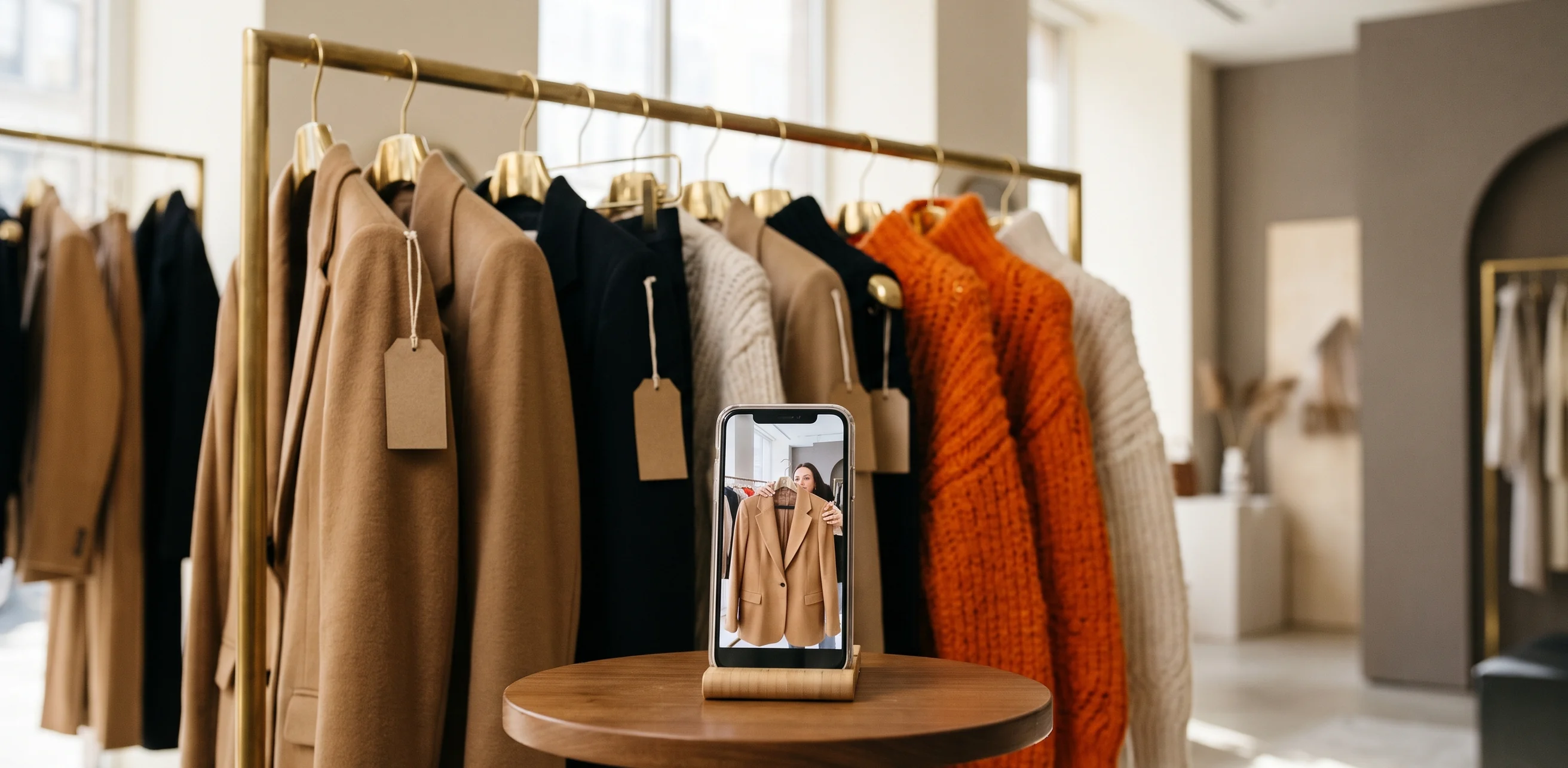
Live shopping lets you buy designer clothes during a live video show, where the seller runs flash sales or auctions and answers your questions in real time. The main advantage for clothes is that you can ask the host to show the fit, the fabric label or a flaw on camera before you commit.
Storefront Live is a New York-based premium live shopping marketplace where brands, independent sellers and Main Street stores host live shows from their own branded storefronts, and shoppers watch, ask questions and buy in the moment. On Storefront Live, you can buy instantly, bid in live auctions or catch flash sales during a show. Items bought in the same show can be bundled to save on shipping.
What to ask the host before buying clothes in a show:
- "Can you hold it up against a measuring tape?" Ask for chest or waist laid flat, and length.
- "Can you show the fabric and care label?" This tells you the composition and where it was made.
- "Is there any wear, pilling or marks?" Ask them to show the cuffs, collar and underarms.
- "Is it new with tags or pre-owned?" Disclosed wear on pre-owned items isn't something you can claim for later.
Two rules to know. Bids are binding: if you're the highest bidder when the auction closes, you've agreed to buy. And "doesn't fit" isn't covered unless the size was misrepresented, so the measurements question matters.
- What you'll find: Brands and sellers who've been vetted, from fashion to handbags and beauty.
- How you buy: Instant purchase, live auctions or flash sales inside a show; items from the same show can be bundled to save on shipping.
- Returns: Buyer Protection covers items that are not received, not as described, damaged or counterfeit. It doesn't cover change of mind.
- Keep in mind: Storefront Live is in early access. Early-access members get invites to private pre-launch shows.
Curious how it works? Join the waitlist to get early access.
How to tell if a designer clothes deal is real
A designer clothes deal is real when the item is genuine, the condition is what you expected, and the total price beats what you'd pay elsewhere for the same piece. Run these checks before you buy:
- Compare the exact item. Search the style name or number, not just the brand. A "70% off" tag means little if the item never sold at the reference price.
- Check what you're actually getting. New with tags, new without tags, or pre-owned? Outlet line or mainline?
- Add shipping, tax and return fees. A cheaper price with a paid return can cost more if it doesn't fit.
- Read the return policy first. Know the window and whether sale items are final.
- Be wary of prices far below everyone else. Very cheap "designer" pieces from unknown sites are a common sign of counterfeits.
When is the best time to buy discounted designer clothes?
The best time to buy is at the end of a season, when stores mark down stock to make room for the next one. Markdowns usually deepen as the sale goes on, while sizes get scarcer.
Off-price stores, resale sites and live shows don't follow a fixed calendar. New stock arrives all the time, so checking often matters more than timing. For a specific piece, set alerts or save it to a wishlist and let the price come to you.
How we checked this
We read the current top search results for this topic and then checked each store's own official pages on November 17, 2026, for how it describes its pricing, returns and authenticity checks. We didn't buy items or test any store's service for this guide, and we didn't quote prices because they change daily. Return windows can change, especially during holidays, so confirm on the store's site before you buy. Storefront Live facts come from its own Buyer Protection policy and Terms.
Designer clothes for cheap FAQ
What is the cheapest way to get designer clothes?
Pre-owned designer clothes on resale sites and new pieces at sample sales are usually the lowest prices, but both often come with limited or no returns. Off-price stores and end-of-season sales cost more but are easier to return. Pick based on how sure you are about size.
Are designer clothes at TJ Maxx real?
TJ Maxx's parent company says it sells brand-name and designer merchandise below full-price retailers' regular prices. It's an established retailer, not a resale marketplace. As with any store, check labels and condition before you buy.
Is outlet clothing the same as the regular store?
Not always. Some outlet stock is marked down from the brand's main stores, and some is designed for the outlet. Both are genuine. Compare outlet prices to other outlet items, not to mainline prices.
How do I know a designer resale site is legit?
Look for who authenticates the items, what happens if one turns out to be fake, and how long you have to report a problem. Read those answers on the site's own help pages. Short report windows mean you should inspect the item the day it arrives.
Can you buy designer clothes on live shopping apps?
Yes. On live shopping apps, sellers show items on camera and sell them through flash sales, auctions or instant purchase. Ask the host for measurements, fabric labels and close-ups of any wear before you buy or bid.
Is it worth buying cheap designer clothes from unknown websites?
Be careful. Prices far below every other store are a common sign of counterfeits, and unknown sites may be hard to reach for a refund. Stick to stores and marketplaces that publish clear return and authenticity policies.
Where Storefront Live fits
Storefront Live is one more way to shop designer clothes: flash sales and auctions in live shows from vetted brands and sellers, where you can ask about fit and condition first. Sellers are reviewed and verified, counterfeits are banned, and Buyer Protection covers counterfeit items reported within 14 days of delivery. Want to shop shows from vetted sellers? Join the Storefront Live waitlist.